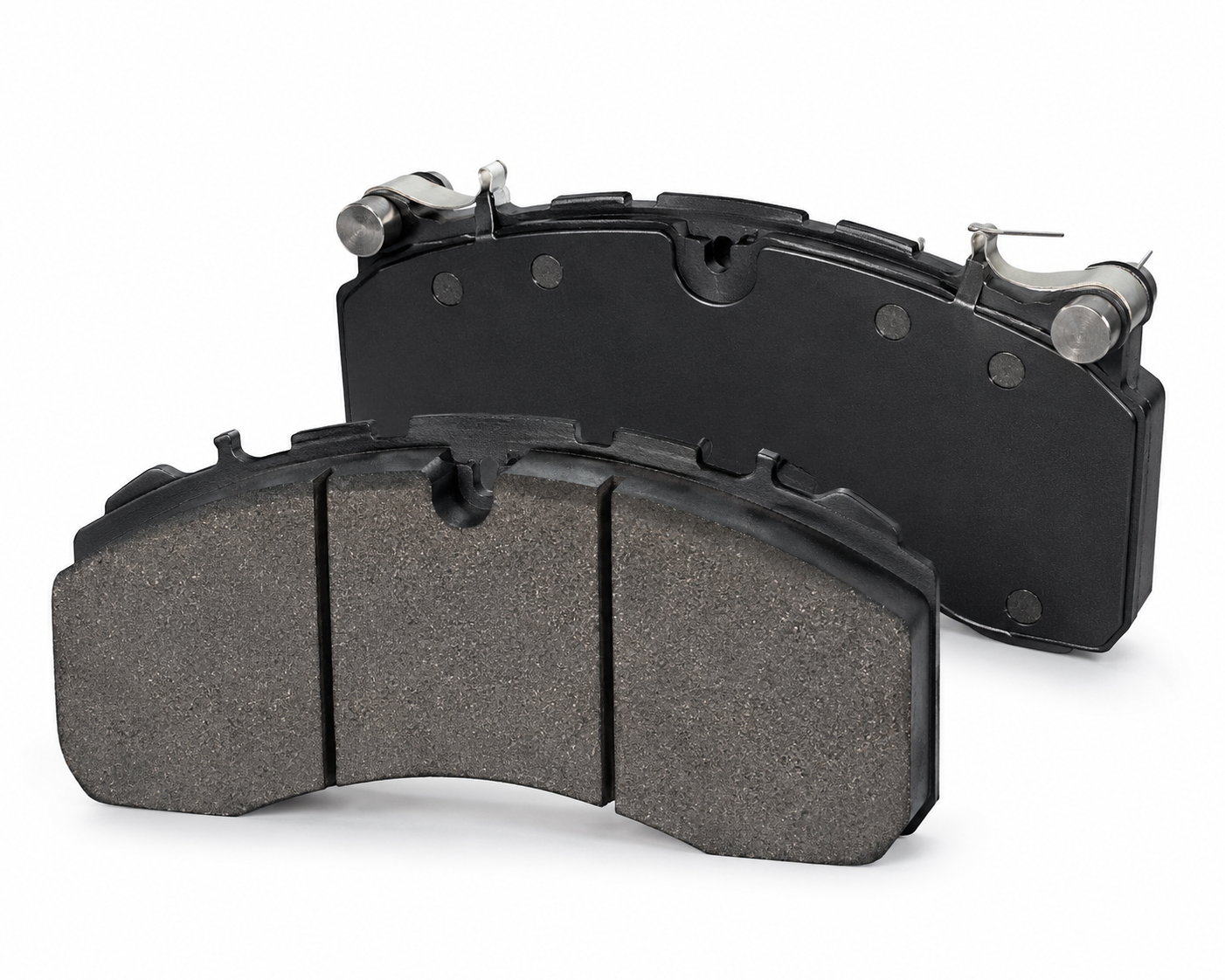
Air disc brakes are the standard braking system on Class 8 heavy duty trucks — Freightliner Cascadia, Kenworth T680, Peterbilt 579, Volvo VNL, Mack Anthem, and International LT have all been spec'ing air disc as standard or optional equipment for years. If your fleet is running newer iron, you're almost certainly dealing with air disc. And air disc comes with a different set of rules for pad selection, replacement intervals, and avoiding comebacks.
How Air Disc Brakes Work
Unlike drum brakes where shoes press outward against a rotating drum, air disc brakes use a caliper to clamp pads against a rotor — engineered specifically for the extreme load cycles, heat demands, and stopping distances required of a loaded Class 8 truck.
The caliper is actuated by an air chamber via a lever mechanism. When air pressure is applied, the lever rotates a spindle that advances the pads against the rotor. This gives air disc brakes shorter stopping distances, more consistent fade resistance under sustained braking, and better performance on grades — all critical for long-haul and heavy haul operations.
FMSI Codes — What They Mean
FMSI (Friction Materials Standards Institute) codes are the universal reference system for brake friction products. For air disc pads on Class 8 trucks, you'll commonly see codes like D1210, D1759, or D1865. The code identifies the pad's physical dimensions — length, width, and thickness of the backing plate.
FMSI codes identify the shape of the pad, not the friction compound. Two pads with the same FMSI code can have very different stopping performance depending on the friction material. Always match both FMSI code AND friction rating to the caliper manufacturer's spec.
| FMSI Code | Common Application | Caliper Fit |
|---|---|---|
| D1210 | Freightliner Cascadia, Kenworth T680 | Knorr-Bremse SN7 |
| D1759 | Volvo VNL, Mack Anthem | Meritor EX225 |
| D1865 | International LT, Peterbilt 579 | Bendix ADB22X |
| D2096 | Kenworth T880, Peterbilt 567 | Knorr-Bremse SK7 |
Caliper Compatibility
The three dominant air disc caliper brands on North American Class 8 trucks are Knorr-Bremse, Meritor, and Bendix. Each caliper family has specific pad requirements — mixing pad brands across caliper families is not recommended and can void warranties or cause uneven wear.
| Caliper Brand | Common Models | Key Notes |
|---|---|---|
| Knorr-Bremse | SN7, SK7, SB7 | Dominant on Freightliner, Kenworth; use OEM or certified aftermarket pads |
| Meritor | EX225, EX+ | Common on Volvo, Mack; Meritor-spec friction compound required |
| Bendix | ADB22X, ADB22XR | Common on International, Peterbilt; Bendix-spec pads only |
Wear Indicators and Replacement Intervals
Most air disc pads have a built-in wear indicator — a small groove or raised tab on the friction material. When the pad wears to that indicator, replace immediately. Many Class 8 trucks also have electronic wear sensors that trigger a dash warning light before the pad is fully worn.
- Typical air disc pad life on Class 8: 150,000 – 250,000 km on highway
- Heavy haul, mountain routes, or frequent stops cut that significantly
- Minimum friction material thickness before replacement: typically 2mm
- Always replace pads axle-by-axle — never one side only
- Inspect rotors at every pad change — measure thickness against discard spec

How to Avoid Costly Comebacks
On a Class 8 truck, a brake comeback means downtime, lost revenue, and a driver safety issue. Comebacks are almost always caused by one of three things: wrong pad spec, improper caliper service, or skipping rotor inspection.
| Root Cause | Symptom | Fix |
|---|---|---|
| Wrong FMSI / friction compound | Noise, vibration, pulling | Match pad spec to caliper manufacturer requirement |
| Caliper not serviced | Uneven wear, dragging | Clean and lubricate caliper slide pins at every pad change |
| Rotor not measured | Pulsation, short pad life | Measure rotor thickness — replace if below discard spec |
| Pads not bedded in | Reduced initial stopping | Follow OEM bed-in procedure after installation |
We stock air disc brake pads, calipers, rotors, and hardware — same-day availability in the GTA. Call (416) 335-8222 or browse online.
OEM vs Aftermarket Pads
OEM pads are sourced directly from the caliper manufacturer (Knorr-Bremse, Meritor, Bendix) and carry full warranty coverage. Quality aftermarket pads — from suppliers who manufacture to OEM spec — offer comparable performance at 25–40% less than dealer pricing, which adds up quickly across a fleet.
The key is sourcing aftermarket from a supplier who can confirm FMSI match and friction compound compatibility with your specific caliper. Generic or unbranded pads are a false economy — one comeback costs more than the savings on the pads.
Browse Air Disc Brake Products →