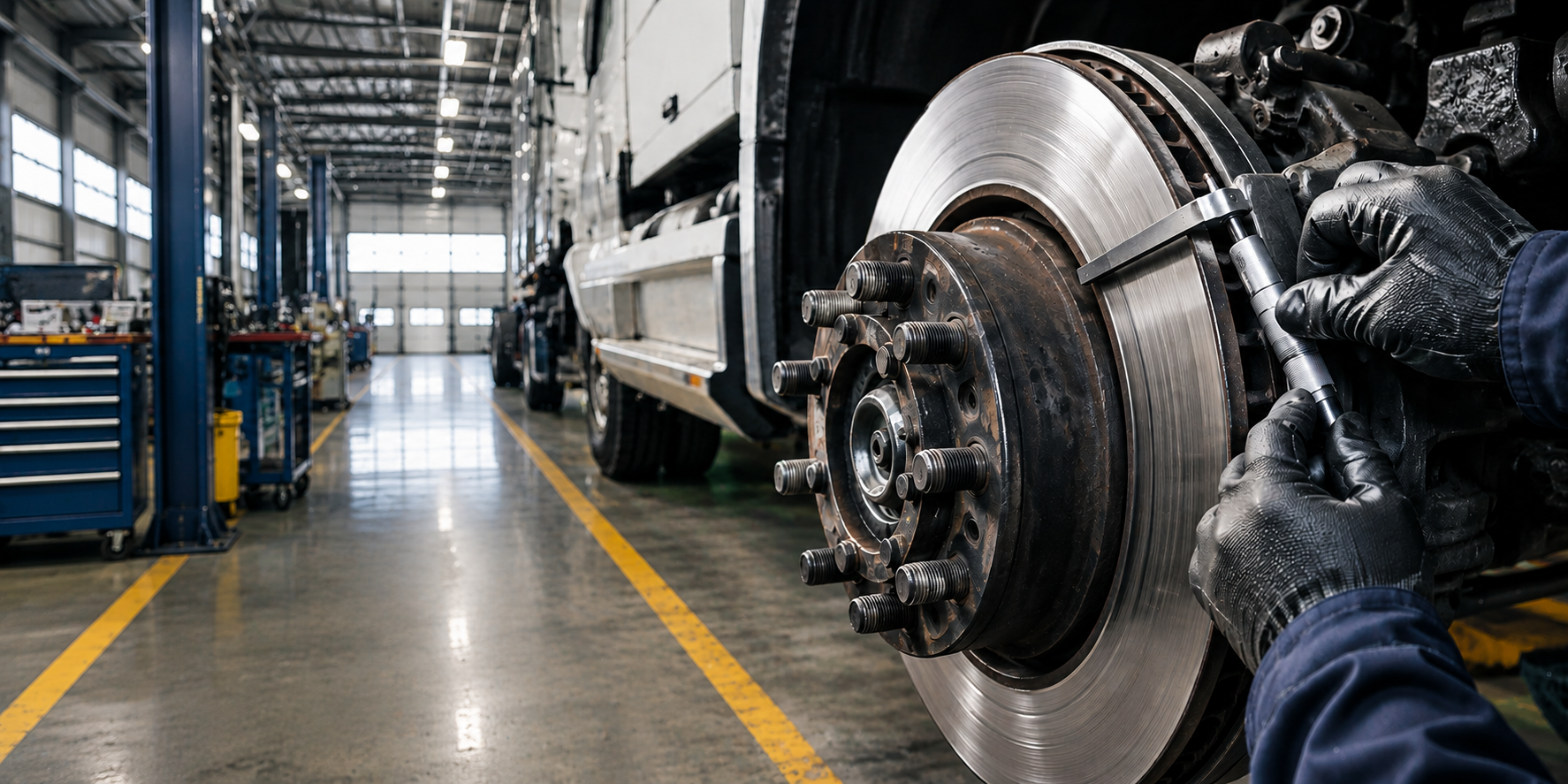
The Hino 258 is one of the most common medium duty trucks on GTA roads — and its braking system is straightforward to maintain when you know the intervals and specs. Rotor life depends on three things: how much load you're carrying, what kind of routes you're running, and what pad compound is installed. Get those right and you won't be replacing rotors more often than necessary.
How Long Do Rotors Last on a Hino 258?
Under normal operating conditions, Hino 258 brake rotors typically last 100,000 – 150,000 km on highway or mixed routes. Urban stop-and-go routes — food delivery, construction, municipal — can cut that to 60,000 – 80,000 km due to the higher frequency of brake applications and heat cycles.
Overloading — even occasionally — accelerates rotor wear significantly. A rotor that normally lasts 120,000 km under proper GVW can fail at 70,000 km if the truck is consistently run over spec.
Signs Your Rotors Need Replacing
Don't wait until the brakes fail inspection. These are the warning signs to watch for:
- Pulsation or vibration through the brake pedal — indicates rotor warping from heat
- Pulling to one side under braking — uneven rotor wear or caliper issue
- Grinding or metal-on-metal noise — pads worn past lining, rotor scoring
- Visible grooves or scoring on the rotor face deeper than 1.5mm
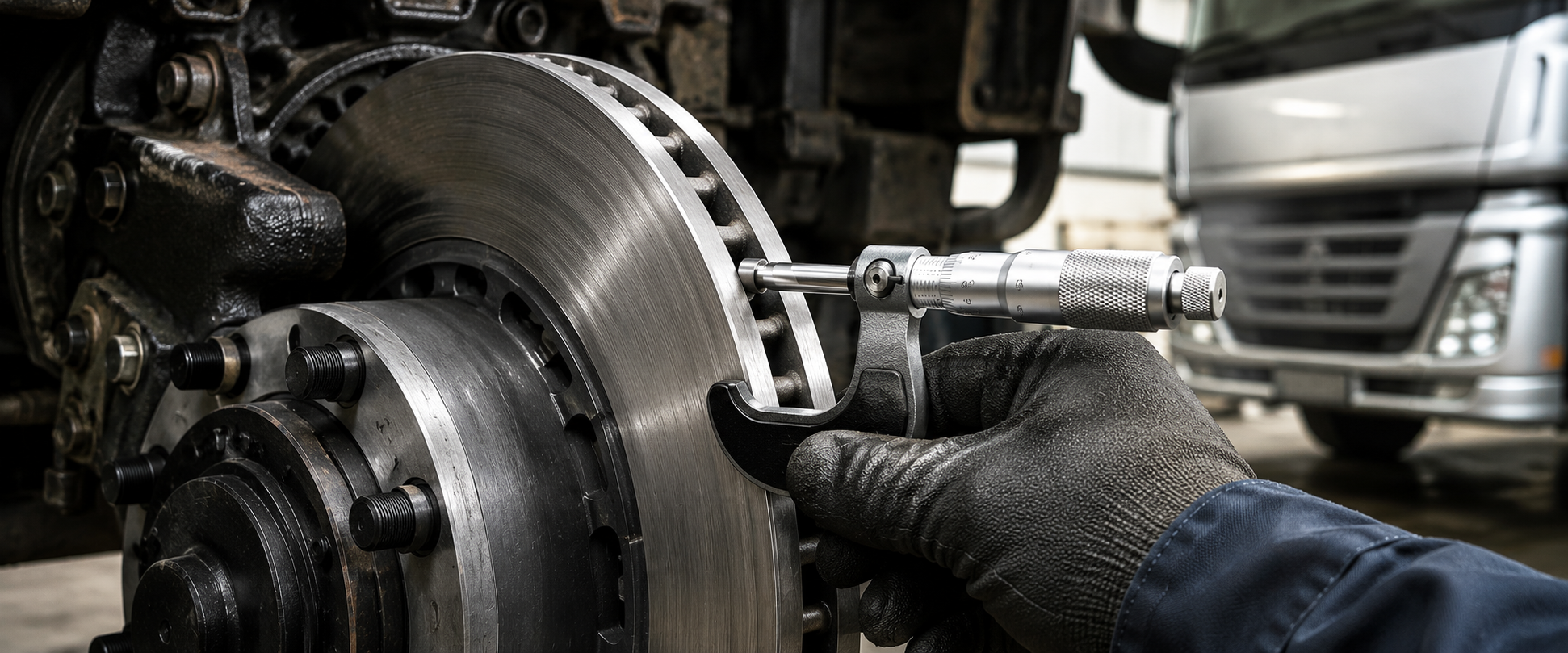
- Rotor thickness below discard spec — measured with a micrometer at multiple points
- Visible rust lip on the outer edge larger than 3mm (normal surface rust is fine)
Hino 258 Rotor Specifications
Always measure rotor thickness before deciding whether to resurface or replace. Resurfacing is only viable if there's enough material left above the discard spec after machining — typically you need at least 1.5mm of material above discard spec to safely resurface.
| Spec | Front | Rear |
|---|---|---|
| New Disc Thickness | 36mm (typical) | 30mm (typical) |
| Discard Thickness | 34mm | 28mm |
| Max Lateral Runout | 0.15mm | 0.15mm |
| Surface Finish | 125 Ra max | 125 Ra max |
Note: Specs vary by model year and axle configuration. Always verify against your Hino service manual or call us to confirm.
How Pad Type Affects Rotor Life
The friction compound in your brake pads has a direct impact on rotor wear rate. Harder compounds (higher edge codes) last longer but generate more heat and are tougher on rotors. Softer compounds are gentler on rotors but wear faster.
| Pad Type | Rotor Wear | Best For |
|---|---|---|
| Low-metallic | Higher rotor wear | Highway, lighter loads |
| Semi-metallic | Moderate | Mixed routes — most common choice |
| NAO / ceramic | Lower rotor wear | Urban stop-and-go, lighter trucks |
For most Hino 258 applications in the GTA — mixed urban and highway — a quality semi-metallic pad matched to Hino's spec is the right balance of pad life, rotor life, and stopping performance.
Replace or Resurface?
Resurfacing (machining) is viable when the rotor is warped or has light scoring but still has material above discard spec. In practice, with aftermarket rotor prices where they are, replacement is often the better value — a machined rotor still has the same number of heat cycles on it and will reach discard thickness sooner than a new rotor.
Our recommendation: if the rotor is within 2mm of discard spec, replace it. The labour cost of pulling the wheel a second time in 20,000 km is not worth the savings on the rotor.
We stock aftermarket brake rotors for Hino 238, 258, and 268. Call (416) 335-8222 to check availability, or browse our catalog online.