
The ABS Light on a Hino Is Not a Minor Warning
On certain Hino conventional models equipped with Allison transmissions, an ABS fault can prevent torque converter lockup. Continued operation under these conditions may increase transmission temperatures and potentially reduce transmission life. The vehicle should be inspected as soon as practical — extended operation without diagnosis is not recommended.
Hino documented the ABS lamp / torque converter lockup interaction in TSB SB-14-016 — applicable to certain 2011–2014 Hino conventional models equipped with Allison transmissions (confirm by VIN). The bulletin provides a wiring harness bypass kit that allows torque converter clutch operation even when the ABS lamp is illuminated. The bypass reduces transmission risk, but it does not repair the ABS system. The ABS fault must still be diagnosed and corrected.
Bottom line: An ABS warning on an Allison-equipped Hino should not be cleared and deferred to the next service interval. Schedule diagnosis promptly, confirm whether your VIN falls within the SB-14-016 scope, and address the root cause before returning the vehicle to full route operation.
A Common Cause of Recurring ABS Faults: Tone Ring Corrosion
ABS faults on Hino trucks can originate from several sources — a damaged wheel speed sensor, wiring harness issues, connector corrosion, hub bearing play, sensor gap, or ABS ECU failure. In Canadian operating conditions, however, tone ring corrosion is among the most common causes of recurring ABS wheel speed sensor faults on Hino hydraulic-disc brake trucks.
The tone ring — also called the exciter ring or reluctor ring — is a toothed metal ring mounted on or integrated into the brake rotor. The ABS wheel speed sensor reads the passing teeth to calculate wheel speed. The ABS module uses this signal to modulate brake pressure during hard stops.
When teeth corrode, deform, or flake, the signal becomes erratic or drops out entirely — triggering an ABS fault code. On many hydraulic-disc Hino 258/268/338 applications, the exciter ring is supplied as part of the brake rotor or hub/rotor assembly — meaning the practical repair is often rotor replacement rather than a standalone tone ring swap. Confirm by VIN and axle configuration before ordering parts.
Canadian operating conditions accelerate this failure pattern significantly:
- Road salt attacks tone ring teeth at the molecular level through the winter season
- Freeze-thaw cycles force moisture into micro-cracks in the tooth surface
- Trucks parked overnight allow moisture to pool on the tone ring with no rotation to dry it off
- Urban stop-and-go routes generate more heat cycles, accelerating the corrosion process
Don't Just Replace the Sensor
ABS light on → shop replaces wheel speed sensor → light returns within weeks. When tone ring corrosion is the root cause, the sensor itself is functioning correctly — it is receiving a bad signal. Replacing the sensor without first inspecting the tone ring can waste time and money. Always inspect the exciter ring before condemning the sensor.
The correct diagnostic sequence:
- Pull ABS fault codes — identify which corner (front left, rear right, etc.)
- Remove wheel on the affected corner
- Visually inspect the tone ring — look for rust, missing teeth, or flaking material
- Check sensor gap and tip condition
- Clean or replace the rotor before condemning the sensor
If the tone ring teeth are structurally intact — surface rust only — cleaning and clearing codes may hold temporarily. If teeth are damaged, missing, or flaking, rotor replacement is typically the correct repair on Hino hydraulic-disc applications where the tone ring is integrated into the rotor assembly. On configurations where the tone ring or hub is a separate serviceable part, only that component may need replacement — confirm by VIN and axle spec before ordering.
What the Repair Involves
Three stages depending on the severity of tone ring damage:
Surface Rust Only
Clean tone ring teeth, clear fault codes, verify sensor gap is within spec, retest. May hold if teeth are structurally intact.
Damaged or Missing Teeth
Rotor or hub/rotor assembly replacement required. On many Hino hydraulic-disc applications the tone ring is integrated — confirm the service assembly by VIN before ordering.
Sensor Damage
If rust debris has physically displaced the sensor or damaged the tip, sensor replacement is also needed. Do rotor first, sensor second.
Not All Replacement Rotors Are the Same
When replacing a rotor, the tone ring construction on the replacement part determines how long before you're doing this job again.
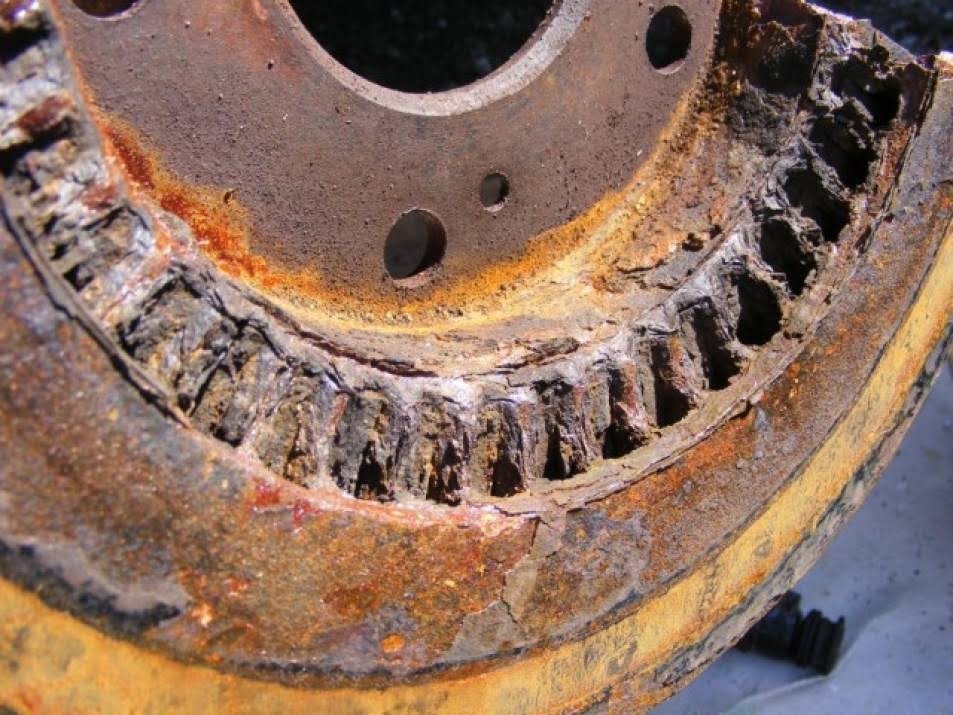
The Problem With Standard Rotors
- Tone ring teeth are cast-in during rotor manufacturing
- Cast-in teeth have a porous surface structure that traps moisture
- No secondary machining — tooth geometry is approximate
- No corrosion protection on the tone ring surface
- Result: the same rust-driven failure pattern begins from day one
Engineered for Canadian Operating Conditions
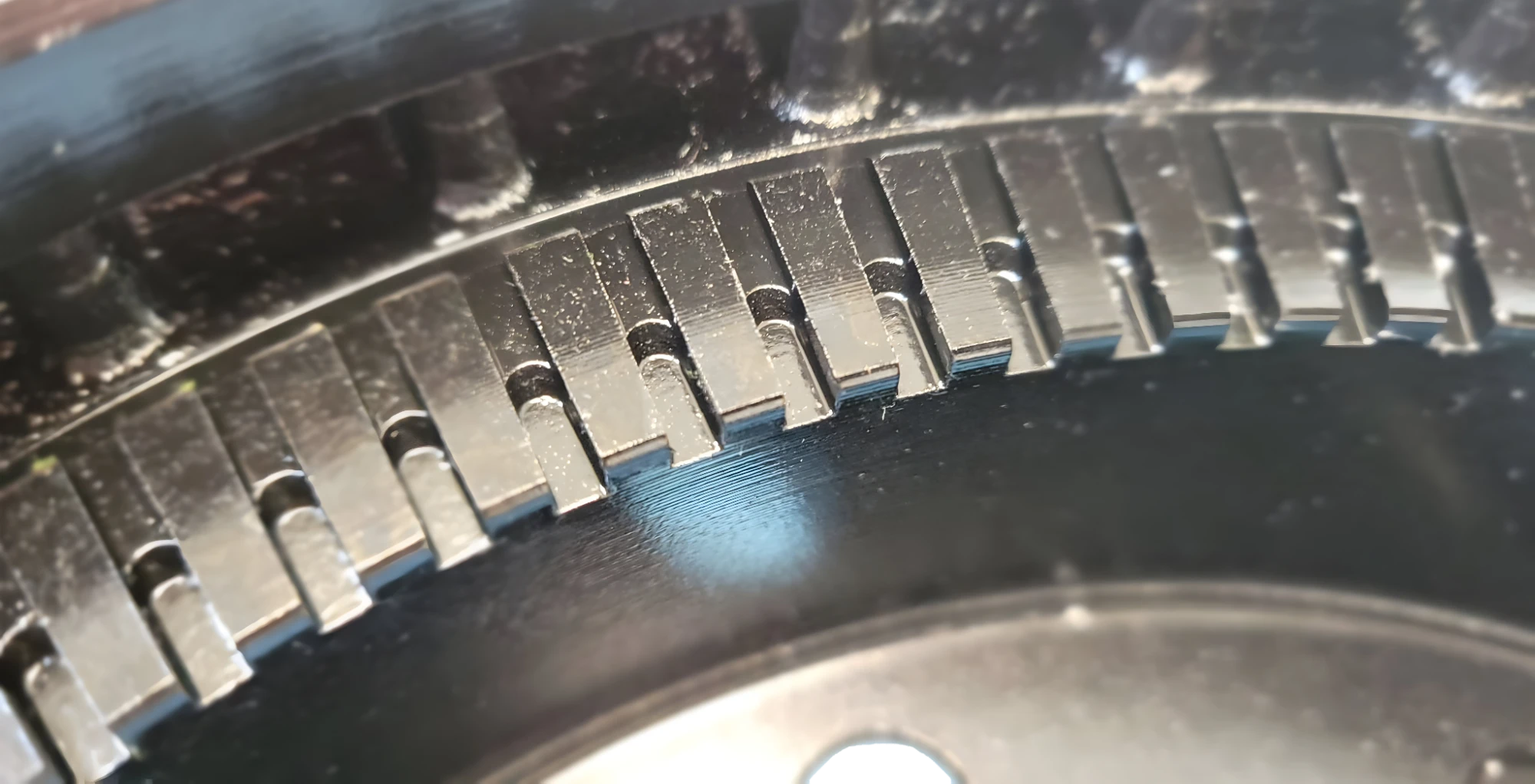
Precision-milled tone ring teeth, anti-corrosion coating, and exact tooth geometry — built specifically to resist the failure pattern that triggers ABS faults on Canadian fleets.
| Factor | Standard Rotor | FleetUltra |
|---|---|---|
| Tone Ring Manufacturing | Cast-in — porous surface | Precision-milled after casting |
| ABS Signal Quality | Uneven tooth profile | Exact geometry — consistent signal |
| Corrosion Protection | None | Anti-corrosion coating |
| Service Life | Standard | Up to 30% longer* |
Salt Spray Test — ASTM B117 (Based on Parts LogiQ / FleetUltra internal test data)
- 240 hrsSevere corrosion visible on tone ring
- 480 hrsHeavy rust buildup, material breakdown, potential ABS failure
- 240 hrsMinimal corrosion, surface intact
- 480 hrsExcellent corrosion resistance, tone ring fully protected
For Canadian fleets running on salted roads, the difference in coating and machining compounds significantly over rotor service life. Fixing a tone ring failure costs more in shop labour than the premium on a better rotor.
* Service life and salt spray results based on Parts LogiQ / FleetUltra internal test data. Actual results vary by operating conditions.
When to Inspect Tone Ring Condition
- At every brake job — remove wheel and visually check teeth on each corner
- Fall seasonal maintenance — before winter salt season begins
- Any time the ABS light illuminates — before driving further
- After any extended period of inactivity — parked trucks rust faster than working ones
FleetUltra rotors stocked for Hino 258, 268, and 338 — built for Canadian operating conditions. Same-day availability in the GTA. Call (416) 335-8222 or browse online.