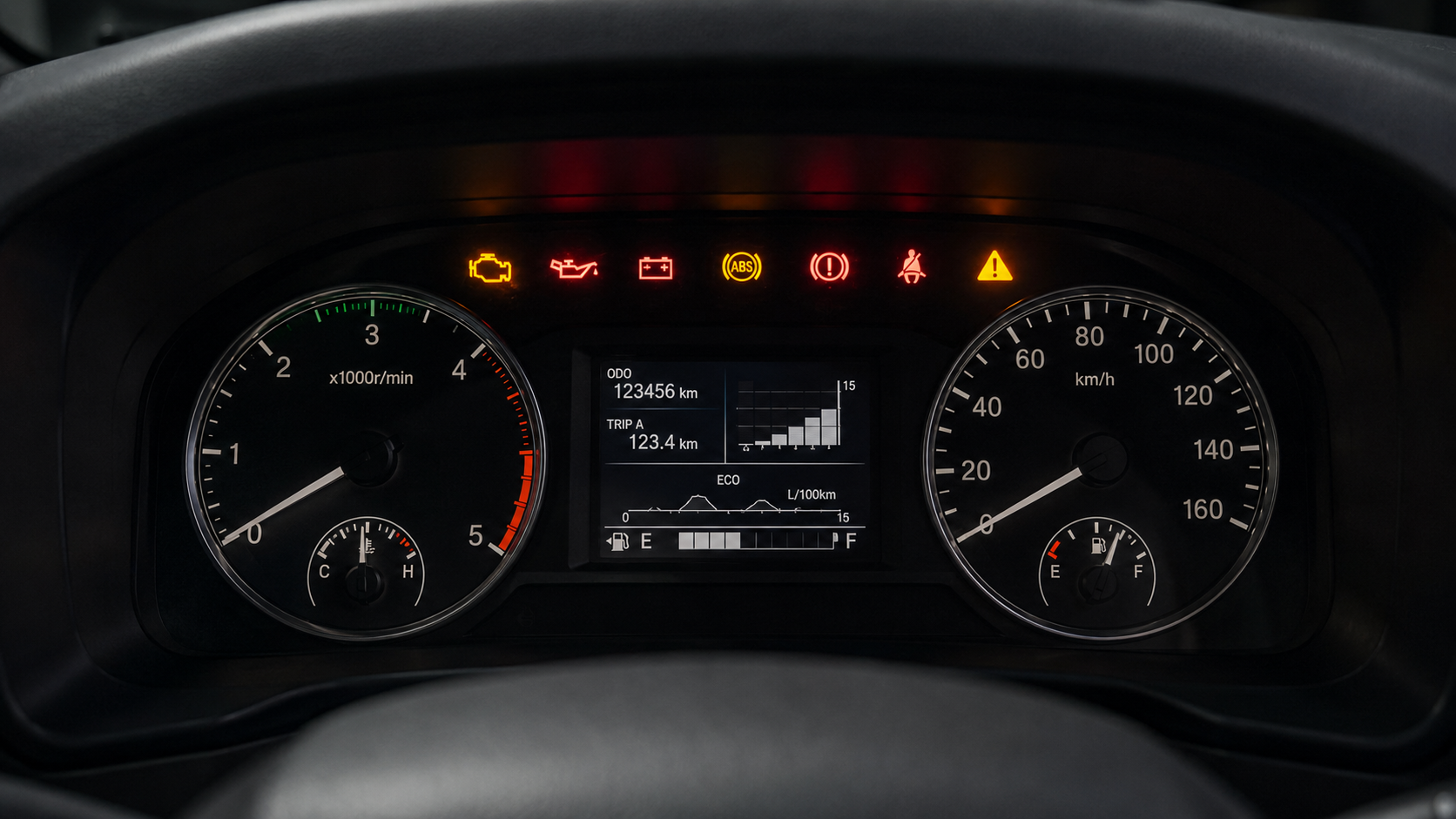
When a warning light appears in your Hino or Isuzu, answer two questions in this order:
- Is the truck safe to keep moving?
- What system needs to be diagnosed?
Do not begin by ordering a part. First identify the light, assess the truck's condition, and retrieve the complete fault code with a truck-compatible scanner.
Stop Immediately When…
Pull over as soon as you can do so safely and shut the truck down when you have:
- A red oil-pressure warning
- A red brake-system warning that remains on after the parking brake is released
- A coolant-temperature or engine-overheat warning
- A shutdown warning, audible alarm, or rapidly rising temperature gauge
- Smoke, a burning smell, a major fluid leak, or abnormal engine noise
- A soft brake pedal, greatly increased pedal effort, or reduced braking ability
Do not continue the route simply because the truck still moves.
Can You Keep Driving?
| Warning Light | Safe to Continue? | Immediate Action |
|---|---|---|
| Oil pressure — red | No | Pull over safely, shut off the engine and check the oil level. Do not run the engine while the warning remains on. |
| Brake system — red | No, unless the light was only caused by the parking brake | Confirm the parking brake is fully released. If the light stays on or braking feels abnormal, stop and arrange service or towing. |
| Coolant temperature / overheat | No | Pull over and shut down as directed by the truck's manual. Allow the engine to cool. Never open a hot radiator or pressurized cooling system. |
| DPF / exhaust filter | Depends on colour and message | Follow the regeneration instructions for the specific truck. An amber warning normally requires prompt attention; a red or escalating warning should not be worked through. |
| Check engine light | Sometimes | A steady light without other symptoms may allow a cautious trip to service. Stop for a flashing light, major power loss, smoke, abnormal operation, or an accompanying red warning. |
| Battery / charging | Only far enough to reach safety | Reduce electrical loads and inspect the drive belt when safe. The truck may stall or fail to restart. |
| ABS only | Usually, with caution | If the red brake light is off and the brakes feel normal, drive carefully to service. ABS assistance may be unavailable. |
These are general triage guidelines. Warning symbols and required actions vary by model, engine, brake system, and model year. Always use the owner's manual that matches the truck's VIN.
Oil-Pressure Warning: Stop the Engine
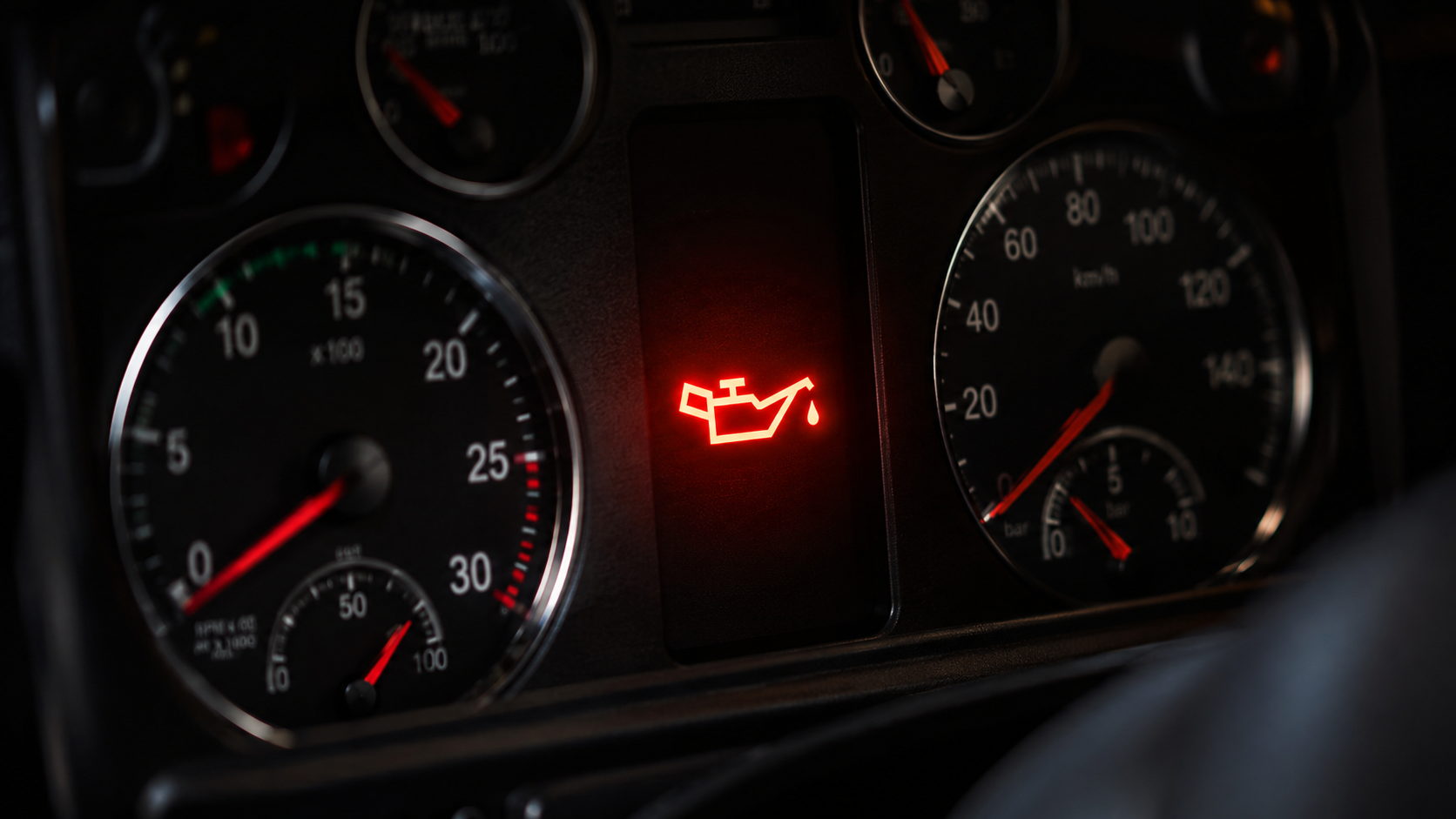
A red oil-pressure warning is one of the most urgent lights on the dashboard.
What to do
- Pull over safely.
- Shut off the engine.
- Wait for the oil to settle and check the level on level ground.
- Look underneath the truck for an active leak.
- Do not restart the engine if the level is normal but the warning remains on.
Possible causes include low oil, a restricted filter or pickup, an electrical or sensor-circuit problem, or loss of mechanical oil pressure. Do not replace the sensor until actual oil pressure and the related wiring have been checked.
Isuzu's owner information instructs operators to stop the engine immediately when the oil-pressure warning appears and not to run the engine while the warning remains on.
Red Brake Warning: Do Not Confuse It With ABS
The red brake-system light is more urgent than the amber ABS light.
First confirm that the parking brake is completely released. If the red light remains on, the truck may have low brake fluid, insufficient brake-assist pressure, or another hydraulic or brake-system fault.
Stop and arrange assistance when:
- The brake pedal feels soft or travels farther than normal
- Considerably more pedal force is needed
- Braking performance has changed
- A brake buzzer or low-pressure warning is active
- The red brake and ABS lights appear together
An Isuzu owner's manual states that a brake warning remaining on after the parking brake is released must be corrected before driving. It also warns that some brake faults can increase stopping distance and pedal effort.
ABS light only
An ABS warning by itself generally means the anti-lock function has been disabled. On applicable Isuzu systems, conventional braking remains available, but the truck no longer has ABS assistance.
Drive cautiously to service only when the red brake warning is off and the pedal feels completely normal.
ABS alone means normal braking still works with the anti-lock system disabled. A red brake warning is more urgent and can mean low fluid or a hydraulic fault — confirm the parking brake is released, and if it stays on or the pedal feels different, stop and arrange service.
Coolant-Temperature Warning: Pull Over and Let It Cool
An overheat warning means the engine temperature has reached an unsafe range.
What to do
- Pull over safely.
- Follow the shutdown procedure in the truck's manual.
- Allow the engine to cool fully.
- Do not remove a radiator or coolant cap while the system is hot.
- Once cool, inspect the coolant level and look for visible leaks.
Possible causes include coolant loss, damaged hoses, a thermostat fault, restricted airflow through the radiator, fan problems, a water-pump fault, or an inaccurate temperature signal.
Do not continue driving to "see whether it clears." Isuzu warns that driving with the overheat light illuminated can damage or seize the engine, and that opening the hot cooling system can cause serious burns.
DPF or Exhaust-Filter Warning: Read the Colour and Message
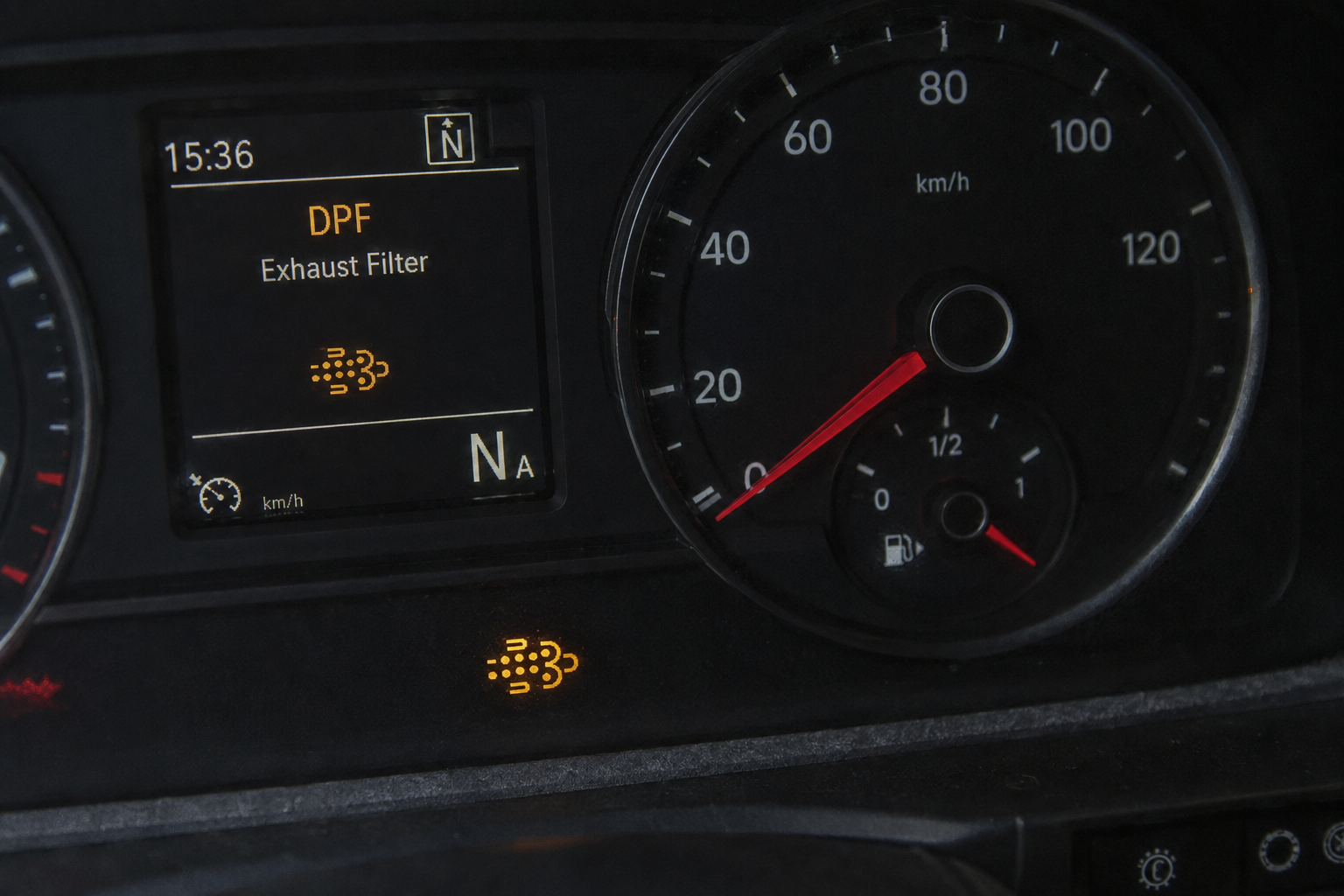
DPF warnings are not all the same. Their meaning can change according to colour, flashing pattern, and accompanying dashboard message.
On some Isuzu applications:
- Green indicates that regeneration is taking place normally.
- Amber means regeneration is required.
- Red means regeneration is required immediately.
Continuing to operate without completing the required regeneration can result in a check-engine warning and reduced engine power.
Diagnostic areas to check
Depending on the fault code, diagnosis may involve:
- DPF soot loading
- Differential-pressure readings and hoses
- Exhaust-temperature sensors
- Incomplete regeneration cycles
- Fuel or air-system faults preventing regeneration
- Wiring, connectors, and power supplies
- The physical condition of the filter
Do not order a DPF or sensor based only on the dashboard light. Retrieve the full code, status, and supporting data first.
Check-Engine Light: Scan Before Replacing Anything
A steady malfunction indicator light means the control system has detected a fault. It does not identify the failed part.
A cautious trip to a repair facility may be reasonable when:
- The light is steady
- There are no red warnings
- Oil pressure and temperature are normal
- The engine runs normally
- There is no smoke, severe vibration, or major power loss
Stop driving when:
- The light flashes
- The engine runs roughly or produces heavy smoke
- The truck enters a severe derate
- A red oil, brake, temperature, or shutdown warning appears
- There is an unusual mechanical noise
An Isuzu manual advises having the vehicle serviced soon and avoiding heavy engine load when the malfunction indicator appears.
Battery or Charging-System Warning
A charging warning usually means that the electrical system is not receiving enough output from the alternator or generator.
Possible causes include:
- A loose, slipping, or broken drive belt
- An alternator or generator fault
- Loose or corroded battery connections
- Damaged charging-system wiring
- An excessive electrical load
Move only as far as necessary to reach a safe location. Once battery voltage falls far enough, the engine may stop and may not restart. On the Isuzu system described in its owner's manual, a loose or broken generator belt is one of the specified causes.
Diagnose Before Ordering Parts
Use this process for every warning light:
1. Record exactly what happened
Photograph the dashboard and note:
- The symbol and colour
- Whether it was steady or flashing
- Any message or audible alarm
- Engine temperature and other gauge readings
- Whether the truck lost power or changed how it drove
- The operating conditions when the warning appeared
2. Check for an immediate safety problem
Before scanning, look for leaks, smoke, overheating, unusual noises, and changes in braking or steering.
3. Retrieve the complete fault information
Use a scanner that is compatible with the truck, engine, and affected control module. Record:
- The complete DTC
- Whether it is active, pending, or previously logged
- Manufacturer-specific subcodes
- Freeze-frame or snapshot information
- Related codes in other modules
Do not erase the codes before recording them.
4. Treat the code as a starting point
A code may identify a circuit, reading, or operating condition. It does not automatically prove that the named sensor or component is defective.
Check the connector, wiring, hoses, power supply, ground, and related mechanical system before replacing the part.
5. Confirm fitment with the VIN
Have the complete VIN, model year, engine family, and fault code ready before ordering. Hino and Isuzu trucks can use different engines, electronics, emissions systems, and brake configurations within the same general model family.
- Identify the light — colour, symbol, and flashing pattern change the urgency
- Stop immediately for oil pressure, brake, or overheat warnings
- Photograph the dashboard and note the operating conditions
- Retrieve the complete DTC before erasing anything
- Verify wiring and connections — don't assume the sensor is at fault
- Have the VIN, model year, and engine family ready before ordering parts
The Bottom Line
A warning light is not a parts list. It is a request for inspection.
Stop immediately for oil-pressure, brake-system, and overheat warnings. Treat DPF, check-engine, charging, and ABS warnings according to their colour, message, and accompanying symptoms. Then retrieve the complete fault code and verify the cause before replacing anything.
We stock Hino and Isuzu sensors, emissions components, belts, brake hardware, and other repair parts for same-day service across the GTA. Send us the VIN, exact warning light, and complete DTC, and we will help identify the correct part for the truck.
Frequently Asked Questions
How do I know if a Hino or Isuzu warning light means I should stop driving?
Stop immediately for a red oil-pressure warning, a red brake warning that stays on after the parking brake is released, a coolant-temperature or overheat warning, a shutdown warning or rapidly rising temperature gauge, smoke, a burning smell, a major fluid leak or abnormal noise, or a soft/harder brake pedal. A steady check engine light or an ABS light alone, with no other symptoms, may allow a cautious drive to service.
What should I do if the oil-pressure warning comes on?
Pull over safely and shut off the engine right away. Wait for the oil to settle, check the level on level ground, and look underneath the truck for an active leak. Don't restart the engine if the level is normal but the warning remains on — have the oil pressure and related wiring checked before assuming the sensor is at fault.
Is the ABS light the same as the red brake warning light?
No. An ABS light alone usually means the anti-lock function is disabled while normal braking still works. The red brake warning light is more urgent and can mean low fluid or a hydraulic system fault. Confirm the parking brake is fully released, and if the light stays on or the pedal feels different, stop and arrange service.
Why does the DPF warning keep coming back?
DPF warnings vary by colour and message: green typically means regeneration is underway normally, amber means regeneration is required, and red means regeneration is required immediately. Recurring warnings are often caused by short-haul or low-load driving that prevents a regeneration cycle from completing, a faulty pressure or temperature sensor, or a filter that has genuinely reached capacity.