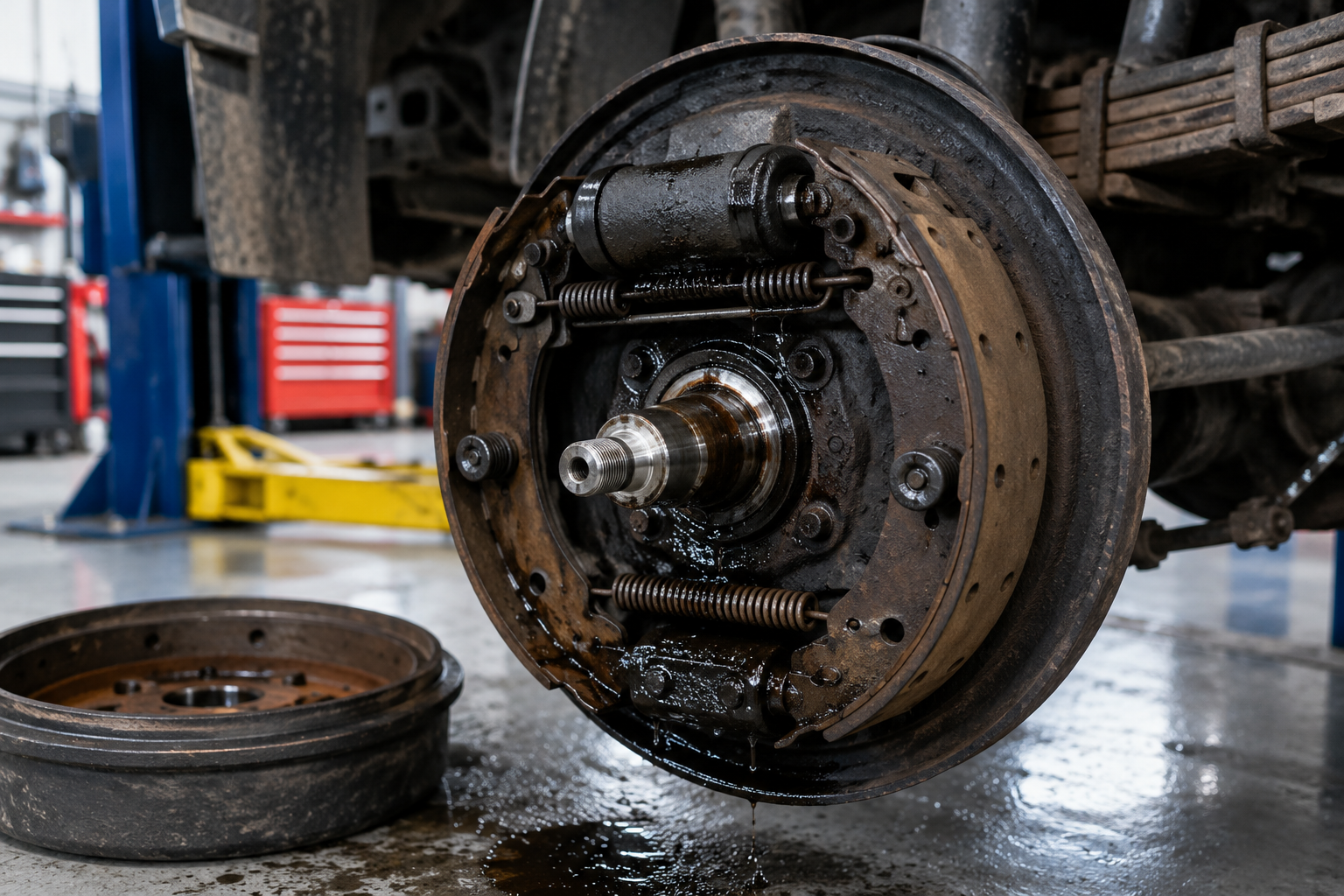
The wheel cylinder is a small, cheap part that does a big job: it's the hydraulic actuator that pushes your drum brake shoes outward against the drum every time you hit the pedal. When it starts to leak, the part itself costs almost nothing — but ignore it and it quietly ruins a set of brake shoes, drops your pedal, and puts a truck out of service. It's one of the most common rear-brake comebacks on medium-duty and low-cab-forward trucks that came with hydraulic rear drum brakes.
One caution before you order parts: confirm the truck actually has hydraulic drum brakes. Many models — including current Isuzu NQR/NRR and various Hino configurations — run four-wheel disc or air-operated brakes, which use no hydraulic wheel cylinders at all. Verify by VIN, model year, and axle option. The good news: on trucks that do use them, a leaking wheel cylinder announces itself early, and catching it before the fluid soaks into the linings is the difference between an early hydraulic repair and a much larger brake job involving contaminated friction components. This guide covers the symptoms, how to confirm the leak, why they fail, and when to replace instead of rebuild.
Do not operate or road-test a truck with an active brake-fluid leak, a low brake-fluid warning, or an abnormally low or soft pedal. Repair and bleed the brake system, then verify operation according to the manufacturer's procedure, before the truck returns to service.
Symptoms of a Leaking Wheel Cylinder
Many wheel-cylinder failures begin as a small seep and worsen over time, but a sudden leak is also possible. Watch for these symptoms:
- Slowly dropping brake fluid with no visible leak at the lines or master cylinder — fluid can escape into a drum where you won't see it.
- A low or soft pedal, or increased pedal travel, as fluid is lost. Pumping may temporarily improve pedal feel, but that isn't a reliable test — and a truck with a suspected hydraulic leak should not be driven.
- Fluid on the backing plate or the inside of the tire and wheel — a wet streak running down from behind the drum.
- A brake that grabs or pulls to one side. Once fluid reaches the linings, that wheel's friction changes and the truck pulls under braking.
- Fresh wetness or a fluid film inside the drum, particularly below the wheel cylinder. Trace the fluid to its source before replacing parts.
By the time a fluid-contaminated brake pulls the truck, the leak has already reached the friction surface — which means the shoes on that wheel are likely done. Treat any unexplained brake pull on a drum-brake axle as a reason to pull the drum and inspect, not just an alignment complaint.
How to Confirm the Leak
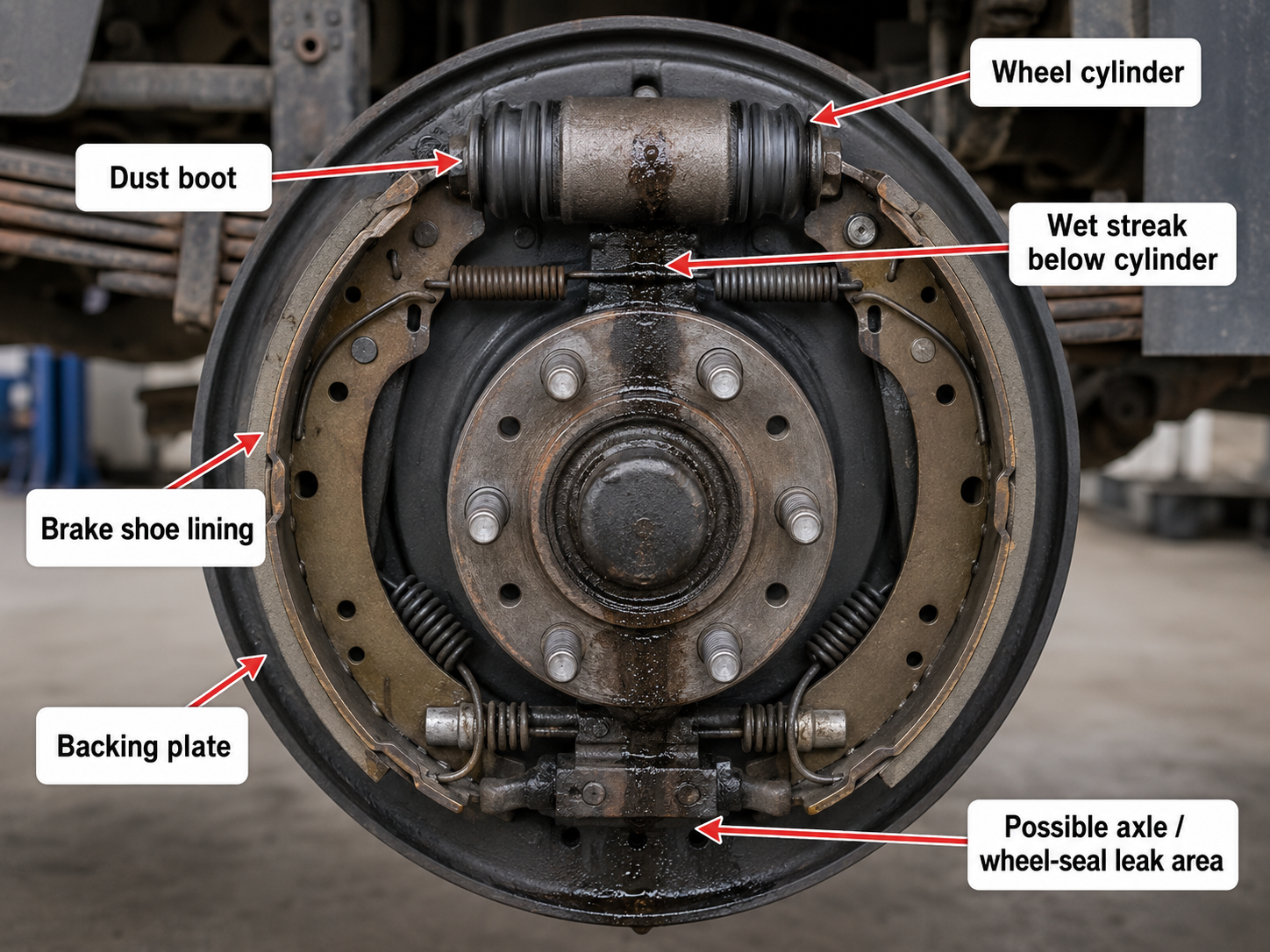
A boot inspection may confirm the wheel cylinder as the source, but the drum still has to come off to determine whether the shoes, drum, and hardware have been contaminated:
- Peel back the dust boot. Each end of the cylinder has a rubber boot over the piston. Gently lift the edge without tearing it. If brake fluid is present behind the boot, service or replace the cylinder per the manufacturer's procedure — don't assume wetness is normal, and distinguish brake fluid from any assembly lubricant where applicable.
- Pull the drum and trace the source. A boot check alone can't tell you if the linings are contaminated. Remove the drum, trace any wetness to its source, and inspect the linings for darkened, glazed, or saturated areas. Check the wheel cylinder as well as the axle and wheel seals — lubricant from a failed seal can also contaminate the brake assembly.
- Treat unexplained fluid loss as a full-system check. A dropping reservoir doesn't localize the leak — it can also fall as disc pads wear, or hide a leak at a caliper, hose, the ABS hydraulic unit, or the rear of the master cylinder. Inspect the whole hydraulic system. (A leaking wheel cylinder is an external leak concealed inside the drum, not fluid consumed internally.)
Always verify against the vehicle's service procedure — boot design, acceptable film, and inspection steps vary by make and model.
Why Wheel Cylinders Leak
Almost every wheel cylinder failure traces back to what's inside the bore:
- Moisture in the brake fluid. Brake fluid is hygroscopic — it absorbs water over time. That moisture can corrode and pit the cylinder bore, and a pitted bore tears at the cup seals until they no longer hold. This is why moisture-contaminated or overdue brake fluid is a common contributor.
- Age-hardened rubber. Heat cycles and years of service harden the cup seals so they stop wiping the bore cleanly.
- Rust and contamination from a torn or missing dust boot, letting road grime and water reach the piston.
Common contributors include seal aging, bore corrosion, damaged dust boots, contamination, and incorrect or incompatible brake fluid. Note the pattern, though: both cylinders on an axle share the same fluid, age, and heat, so when one fails it's worth inspecting the other.
The Expensive Mistake: Reusing Fluid-Soaked Shoes
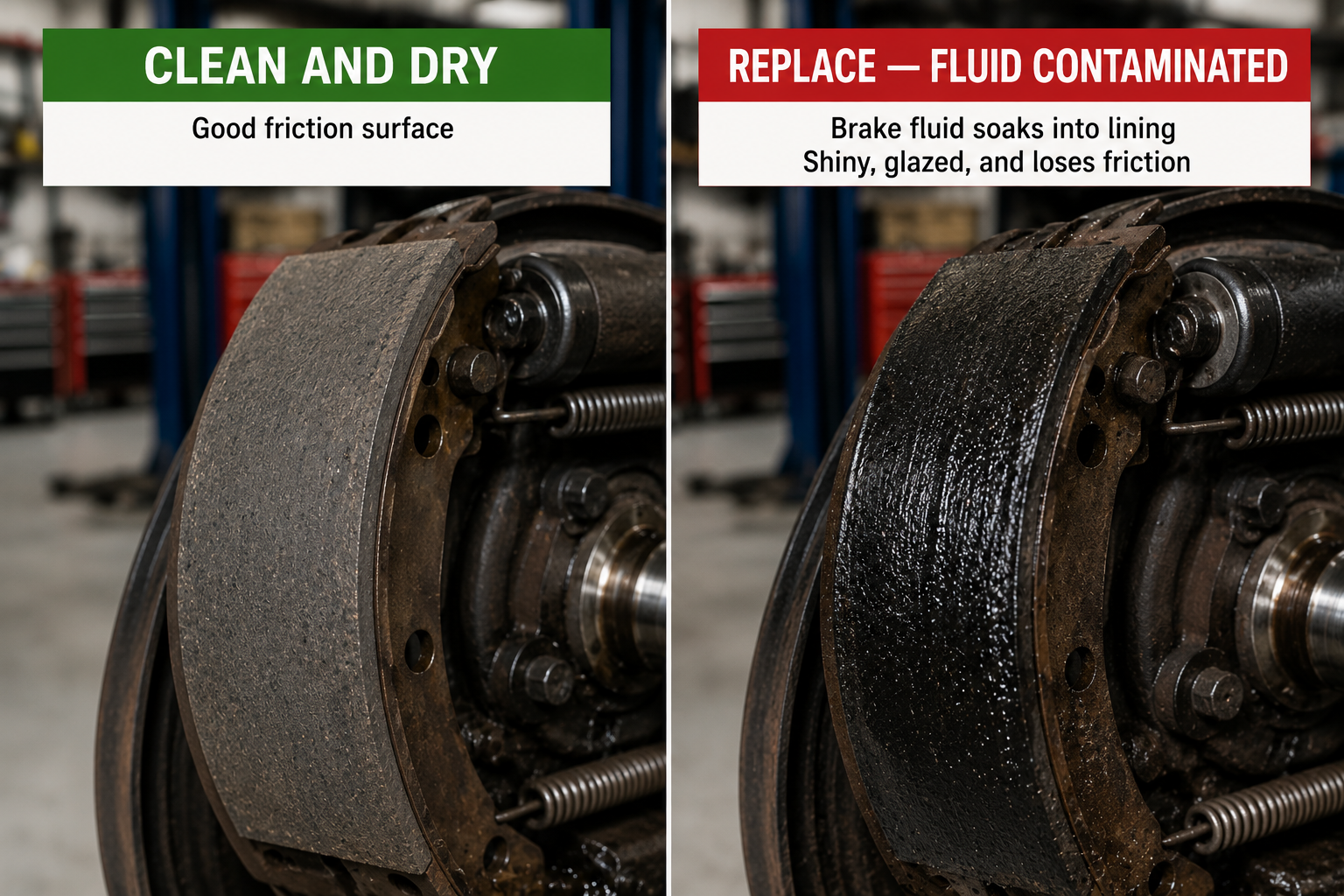
This is the part that turns a cheap job into an expensive one. Brake fluid that has soaked into the friction lining cannot be cleaned out. It wicks into the material, and a contaminated shoe grabs, pulls, and glazes no matter how much brake cleaner you spray on it. If the leak reached the linings, the shoes on that axle are done.
That's the whole reason to catch a wheel cylinder leak early — a cylinder caught while it's only weeping behind the boot is a contained hydraulic repair. One that's been leaking long enough to soak the shoes turns into an axle set of shoes, wheel-cylinder service, a drum clean-up and inspection, and bleeding.
- Replace the complete brake-shoe set across that axle — don't try to clean contaminated linings
- Inspect both wheel cylinders; replace in axle pairs when age or condition supports it
- Clean the drum and backing plate of all fluid residue, then inspect and measure the drum
- Bleed the system using the manufacturer's procedure and fluid; replace or flush the fluid when it's due or contaminated. If the reservoir ran dry or air may have entered the ABS unit, follow the applicable master-cylinder and ABS bleed procedure
Replace or Rebuild?
Rebuild kits (new cups and boots) exist, but on modern medium-duty wheel cylinders, replacement is usually the better call — and often cheaper once labour is counted:
| Situation | Recommendation |
|---|---|
| Bore is smooth, cylinder is recent | Rebuild kit is viable, but inspect the bore carefully first |
| Bore is pitted or corroded | Replace — a pitted bore will chew up new seals quickly |
| Fleet / downtime matters | Inspect both sides and replace in axle pairs when age or condition supports it — opening the brake twice costs far more than the part |
Whichever route you choose, inspect both sides of the axle and follow the applicable service procedure. If either side's friction lining is contaminated, replace the brake shoes as a complete axle set — mixing old and new friction components can create uneven braking. Inspect the opposite wheel cylinder and replace both when age, corrosion, condition, or fleet policy supports it. While you're in there, it's also the right time to check the drum condition — and if you're chasing a vibration rather than a leak, see our guide on why new brake drums can still pulsate.
The Fleet Takeaway
Wheel cylinders should be treated as an inspection item during drum-brake service, not something checked only after a major leak develops. On a drum-brake fleet, the cheapest way to deal with them is to service the brake fluid at the manufacturer's specified interval — limiting the accumulated moisture and contamination that corrode the bore — and to inspect behind the drums during regular brake service so a weeping cylinder gets caught before it reaches the linings.
The math is simple: a wheel cylinder caught early is a small part and a short bay visit. Caught late, the repair may add an axle set of shoes, wheel-cylinder service, drum cleaning and inspection, bleeding, and extended downtime. Machine the drum only when permitted and when its finished diameter will remain within specification; replace it if it exceeds the maximum or discard diameter or has non-serviceable damage. Stock the common cylinders for your fleet's models so a caught leak doesn't become a wait for parts.
- Peel back both dust boots and check for trapped brake fluid
- Inspect shoe linings for oily / glazed contamination
- Inspect both cylinders; replace in axle pairs when age / condition supports it
- Replace the complete shoe set across the axle if any fluid reached the linings
- Bleed per the manufacturer's sequence; flush / replace fluid when required
- Clean, inspect, and measure the drum. Machine only when permitted and the finished diameter stays within spec; replace a drum past its discard limit or with non-serviceable damage
Frequently Asked Questions
What are the symptoms of a leaking brake wheel cylinder?
A low or spongy brake pedal, a slowly dropping brake fluid reservoir with no visible line leak, brake fluid weeping down the backing plate or onto the inside of the tire, and a brake that grabs or pulls once fluid contaminates the shoe linings. Peeling back the wheel cylinder's dust boot and finding trapped fluid confirms it.
Do I need to replace brake shoes if the wheel cylinder leaked?
If brake fluid soaked into the friction linings, yes. Fluid-contaminated shoes can't be cleaned reliably — the fluid wicks into the lining material and causes grabbing and pulling. Replace the shoes on that axle along with the wheel cylinder, and clean the drum and backing plate.
Should I replace wheel cylinders in pairs?
Inspecting both wheel cylinders on the axle is good practice — they've seen identical age, heat, and fluid moisture, so if one has failed the other is often close behind. Replace in pairs when condition, age, or fleet policy supports it, and follow the OEM procedure. Brake shoes should be replaced as a complete axle set to keep braking balanced.
Why do brake wheel cylinders leak?
Brake fluid is hygroscopic — it absorbs moisture over time, which can corrode and pit the cylinder bore. Combined with age-hardened rubber cup seals and rust, the seals no longer wipe the bore cleanly and fluid escapes past them. Overdue or moisture-contaminated fluid is a common contributor, along with seal aging, torn boots, and contamination.